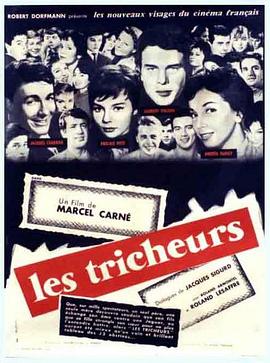
Middle class student Bob Letellier enters a new world when he meets Alain, a free-thinking rebel who, along with his group of young Parisians, has opted for a life of instant gratification instead of work and commitment. At a party, Bob meets a young woman, Mic, who appears to be just as carefree and cynical as Alain. Mic's only dream is to own a luxury car, and with Bob's help, she manages to find the money to but it. Mic's friend Clo discovers she is pregnant and, not knowing who the father is, she asks Bob to marry her. When they next meet at a party, Bob and Mic deny that they have any feelings for one another - a declaration that soon leads to tragedy... Marcel Carné is widely regarded as one of the standard bearers of French quality cinema of the 1930s and 1940s, responsible for such masterpieces as Quai des brumes (1938) and Les Enfants du Paradis (1945). How ironic then that, in 1958, towards the end of his film-making career, he should make a film which dared to portray the attitudes and behaviour of the 1950s youth, in a way that effectively captures the mood and sentiment of the time. Les Tricheurs was a hugely controversial film, not least because of its blatant depiction of adolescent free-love, and was even banned in some regions of France. It also received some intensely unfavourable reviews, most notably from the young hotheads on the Cahiers du cinéma such as François Truffaut who cited this film as a prime example of the decline of French cinema into mediocrity. In spite of all this negative press, the film proved to be an astonishing commercial success, attracting five million cinema-goers, and was awarded the Grand Prix du Cinéma français in 1958. Whilst Les Tricheurs is not as flawless as Carné's earlier masterpieces, it is nonetheless a significant work, having the power to both shock and move its audience, whilst having great entertainment value. It evokes the mood of its time in a way that few French films of this period did, depicting young people as pleasure-seeking rebels, rejecting the austerity and discipline of the previous generation whilst pursuing a life without cares, responsibilities or love. Similarities with James Dean's films of the 1950s (most notably Rebel without a Cause) are apparent, although Carné's treatment of young people is far more abstract - in his film they merely symbolise a world that has lost its way, more or less victims of post-war prosperity. Although the young people in Les Tricheurs lack the authenticity to be totally credible, the film does make an important, and indeed quite disturbing point, about where the permissive society may be heading. Much of the pleasure of the film is in the performances from its four lead actors, Jacques Charrier, Pascale Petit, Laurent Terzieff and Andréa Parisy, although only Terzieff is really convincing in his role. Marcel Carné originally considered Alain Delon and Jean-Paul Belmondo for the parts of Bob and Alain respectively, before opting for Charrier and Terzieff. As a consolation, Carné offered Belmondo a smaller part in the film - alas too small for the actor to be noticed by the public. Belmondo's breakthrough had to wait until the following year when he starred in Jean-Luc Godard's revolutionary A bout de souffle, a film which offers a very different perspective of the youth generation.
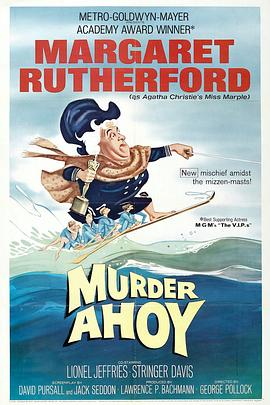
Marple is extremely proud when she is appointed to the board of trustees of a merchant marine training vessel whose mission is to rehabilitate young criminals. As in all of her endeavors, Miss Marple intends to take an active role in the job and even shows up to the board meeting dressed in naval blues. When a fellow trustee is poisoned just prior to his making some kind of revelation, Miss Marple decides to use her position to spend time on the ship. This upsets the vessel's fragile social network as she dispossesses blustering Captain Rhumstone from his quarters. When two ship's officers are later found murdered also, Miss Marple enlists help from her friend Jim Stringer and Inspector Craddock to expose the murderer.
阴云密布的旷野荒原,一位身披斗篷的孤独女人行走其间。她缓缓地讲述着一个关于爱与复仇的故事。19世纪,英国约克郡。呼啸山庄的主人恩萧先生带回了一个男孩,并取名为希斯克利夫。几年后,希斯克利夫(拉尔夫·费因斯 Ralph Fiennes饰)便长成了一位英俊少年。恩萧的女儿凯瑟琳(朱丽叶·比诺什 Juliette Binoche饰)一下子就迷上了这个沉默寡言、我行我素的男孩。然而恩萧先生对希斯克利夫的宠爱,却让恩萧的儿子亨德雷(杰瑞米·诺森 Jeremy Northam饰)异常嫉妒。一次意外,让凯瑟琳邂逅了贵族埃德加·林顿(西蒙·谢普德 Simon Shepherd饰)。面对粗俗的希斯克利夫和优雅的林顿家人,凯瑟琳还是嫁给了埃德加。希斯克利夫一怒之下愤然离去。几年后,衣锦还乡的希斯克利夫展开了疯狂地复仇。 本片改编自英国女作家勃朗特姐妹之一艾米莉·勃朗特的同名作品,著名影星朱丽叶·比诺什和拉尔夫·费因斯首度合作演绎这段经典旷世爱情故事。